Why You Can't Sleep Through the Night Anymore
By Meghalatha Gopal · Self-Healing Mentor & Author of Your Body Is Speaking
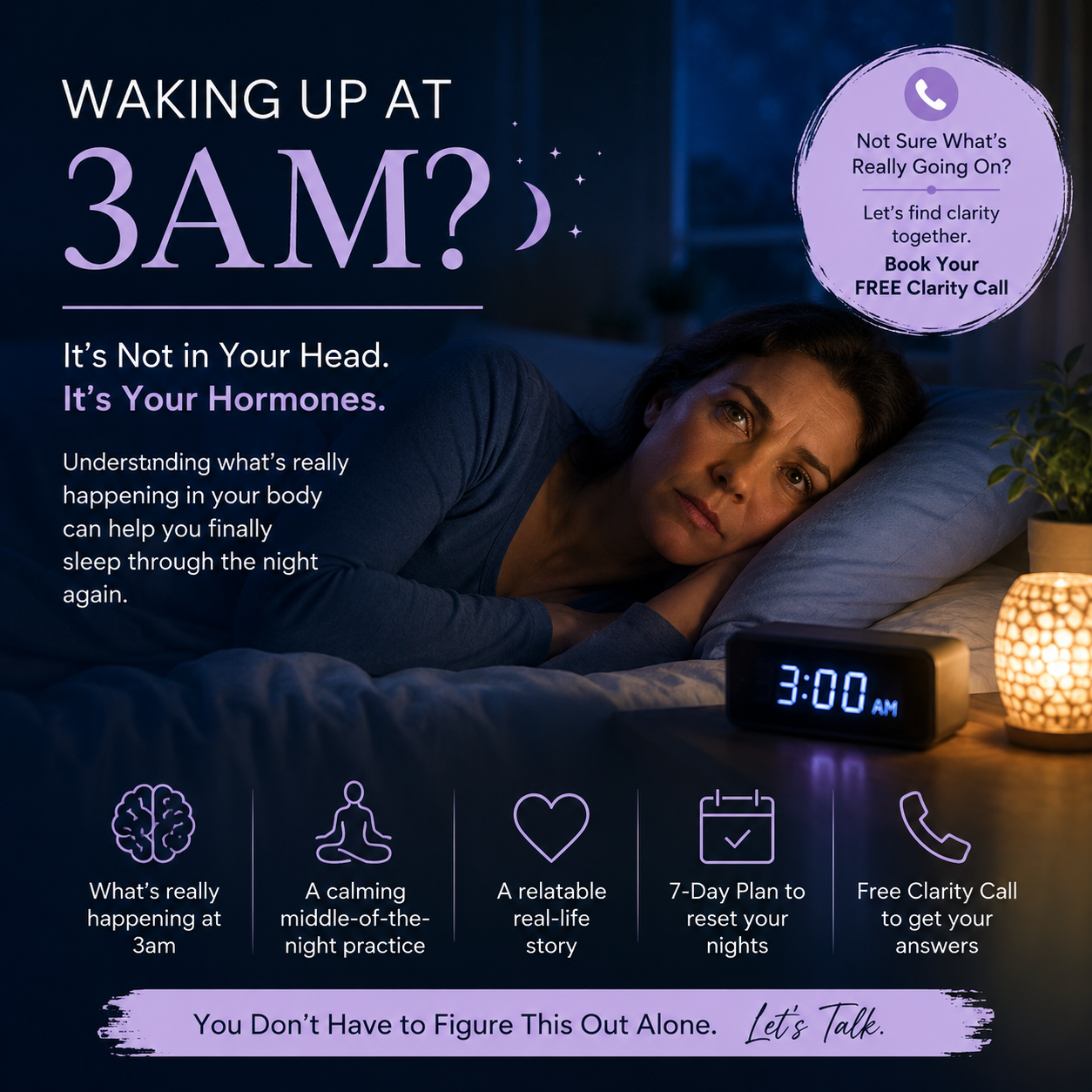
“Have you ever woken up at the exact same time, night after night, for no clear reason at all?”
You fall asleep just fine. But somewhere in the middle of the night — often around 2 or 3am — your eyes snap open, your mind starts racing, and getting back to sleep feels almost impossible.
If this has become your normal: you are not doing anything wrong, and this is not just "getting older." There is a real, physiological reason this keeps happening.
Many women tell me, "I fall asleep fine, but I wake up every single night at the same time. What is happening to me?"
Can you relate to this?
- Waking at the same time almost every night
- A racing or anxious mind the moment you wake
- Difficulty falling back asleep, even when exhausted
- Feeling wired and tired at the same time
- Dreading bedtime because you know the waking will come
What may be happening in your body
Night waking during perimenopause is closely tied to both fluctuating hormones and your cortisol rhythm.
Think of sleep like a night watchman's shift — normally it patrols quietly in the background without ever waking you. But as progesterone (your naturally calming, sedative hormone) begins to decline and fluctuate, sleep becomes lighter and more easily disrupted.
At the same time, cortisol naturally rises in the early hours to help you wake in the morning. But with chronic stress, it can rise earlier and more sharply — often between 2 and 4am — pulling you out of sleep long before your body is ready.
Add in temperature shifts (mild hot flashes that aren't dramatically "hot," just enough to disturb sleep), and you get the very common pattern: falling asleep easily, then waking abruptly a few hours later, wide awake.
Common myths about night waking
"If I just get more tired during the day, I'll sleep through the night."
Exhaustion doesn't fix hormonally-driven waking. In fact, overexerting yourself can worsen it by raising stress hormones further.
"This means I have insomnia."
This specific pattern — falling asleep easily but waking early — is different from classic insomnia. It is closely tied to hormonal and cortisol rhythms, not an inability to sleep.
"There's nothing to do at 3am except lie there frustrated."
Specific calming techniques can help the nervous system settle, even when sleep doesn't come immediately. What you do in those waking minutes matters more than you think.
The RRR Method — a gentler way back to rest
Release
Release the frustration and mental alertness through slow breathing or gentle self-talk. Naming what you feel is often the first step to softening it.
Rebalance
Calming techniques lower the activated cortisol and gently shift the nervous system back toward rest — even if sleep does not return right away.
Rise
Consistent practices, night after night, reduce the frequency and intensity of these wake-ups over time. Your body relearns that it is safe to stay asleep.
A Body-Scan Practice to Try Tonight
Keep your eyes closed. Stay lying down. There is nothing you need to fix — just gently notice.
- Begin at your feet. Silently notice each body part as you move upward — feet, legs, hips, stomach, chest, arms, shoulders, neck, face.
- With each part, silently say the word soften.
- If your mind wanders to worry or the clock, gently return to the body scan without judgement.
You are not trying to force sleep. You are simply signalling to your nervous system that it is safe to rest.
“Your body is not failing you at 3am. It's simply recalibrating.”
A story I often think about
A nurse who worked with me described waking at 3am every night for months. She had started dreading bedtime entirely — knowing the waking would come.
After a few weeks of the body-scan practice and a simple evening wind-down routine, she told me something I have never forgotten.
"I still wake up sometimes, but I fall back asleep now instead of lying there for an hour. That alone gave me my mornings back."
Common mistakes women make with night waking
- Checking the phone or the clock the moment they wake, which instantly increases alertness
- Lying in bed frustrated and mentally spiralling about lost sleep
- Relying on caffeine to cope during the day, which then worsens the following night's sleep
- Not addressing the evening's stress, which often surfaces during these early morning wake-ups
Frequently asked questions
Why do I wake up at the same time every night?
It is usually your cortisol rhythm rising earlier than it should, combined with lighter, more easily disrupted sleep from fluctuating hormones.
Is this the same as insomnia?
Not quite. This is a distinct pattern tied to perimenopause hormones. If it is significantly affecting your life, it is still worth discussing with your doctor.
Should I get up if I can't fall back asleep?
Many sleep experts suggest getting up briefly after around 20 minutes — keep the lights dim, do something calm and quiet, and return to bed when you feel drowsy.
Can hot flashes cause night waking even if I don't feel very hot?
Yes. Even mild temperature shifts your body barely registers as heat can disrupt deep sleep and pull you awake.
Will this improve after menopause?
Many women find sleep gradually improves as hormones stabilise post-menopause, especially with steady nervous system support along the way.
Does screen time before bed make this worse?
Yes. Late screen exposure affects both melatonin production and nervous system arousal, making early wake-ups more likely.
Can breathing exercises really help in the middle of the night?
Yes. Slow, calming breathing signals safety to the nervous system and helps lower the cortisol spike that woke you.
Your 7-Day Sleep Support Plan
- Day 1–2: Practice the body-scan technique whenever you wake at night.
- Day 3: Reduce screens for 30 minutes before bed.
- Day 4: Keep your bedroom slightly cooler than usual.
- Day 5: Try one EFT tapping round: "Even though I worry about waking up tonight, I trust my body is learning to rest."
- Day 6: Reduce caffeine intake after midday.
- Day 7: Reflect on any shifts in how quickly you settle back to sleep.
What you can do next
- Practice the body-scan technique nightly this week and notice what shifts.
- Download the free guide Am I Just Tired, Or Is It Something Else? for a deeper self-check.
- If you would like personalised support, book a free clarity call with me at meghalatha.com.
- Read the sleep chapter of Your Body Is Speaking for the complete nighttime restoration map.
Healing doesn't happen because we know more. Healing happens because we gently practice what truly supports our body, one day at a time. You are much much more powerful than what you think you are.