
Why Do I Feel Like a Different Person? Understanding Perimenopause Mood Swings
By Meghalatha Gopal · Self-Healing Mentor & Author of Your Body Is Speaking

Have you ever felt completely calm one moment, and irritated or tearful the next — with no clear reason why?
Maybe you've snapped at someone you love over something small, and immediately felt guilty, confused, even ashamed. "That's not like me," you think. "Why did I react that way?"
If this has been happening, please hear this: you have not become a different person. Your emotional regulation system is going through real, physical change.
“You have not become a different person. Your emotional regulation system is going through real, physical change.”
So many women tell me, "Megha, I don't recognize myself anymore. I feel guilty all the time." That guilt often hurts more than the mood swings themselves.
Can You Relate to This?
- Sudden irritability or tearfulness without a clear trigger
- Snapping at loved ones and immediately regretting it
- Feeling emotionally unpredictable, even to yourself
- Guilt or shame after emotional reactions
- Worry about how this is affecting your relationships

What May Be Happening in Your Body
Mood swings during perimenopause are strongly connected to fluctuating estrogen and progesterone, which directly influence brain chemicals involved in mood regulation, including serotonin.
Think of your emotional regulation system like a thermostat for feelings. Normally, it helps you respond to situations proportionately — mild frustration for a small inconvenience, real sadness for a real loss. But as hormone levels rise and fall unpredictably during this transition, that thermostat can become less steady, meaning emotional responses may feel more intense, sudden, or disproportionate to the situation itself.
Layer this with often-interrupted sleep, physical discomfort from other symptoms, and years of emotional labor many women have carried quietly, and you get a nervous system with less capacity to buffer emotional reactions the way it once did. Sometimes it even shows up in the body first — your heart starting to race for no reason — and often the resentment you may still be carrying underneath it is part of the load.
This is not a character flaw. It's a genuine shift in your body's emotional regulation capacity, and it responds well to gentle, consistent support.
Common Myths About Mood Swings
"I'm just being dramatic or difficult."
Mood swings in this stage are rooted in real hormonal shifts affecting brain chemistry, not personal weakness or overreaction.
"I need to suppress my emotions to keep the peace."
Suppressing emotions often increases their intensity later; healthy release is more effective than suppression.
"My family should just understand and adjust."
While understanding from loved ones helps, building your own emotional regulation tools tends to create more lasting steadiness.
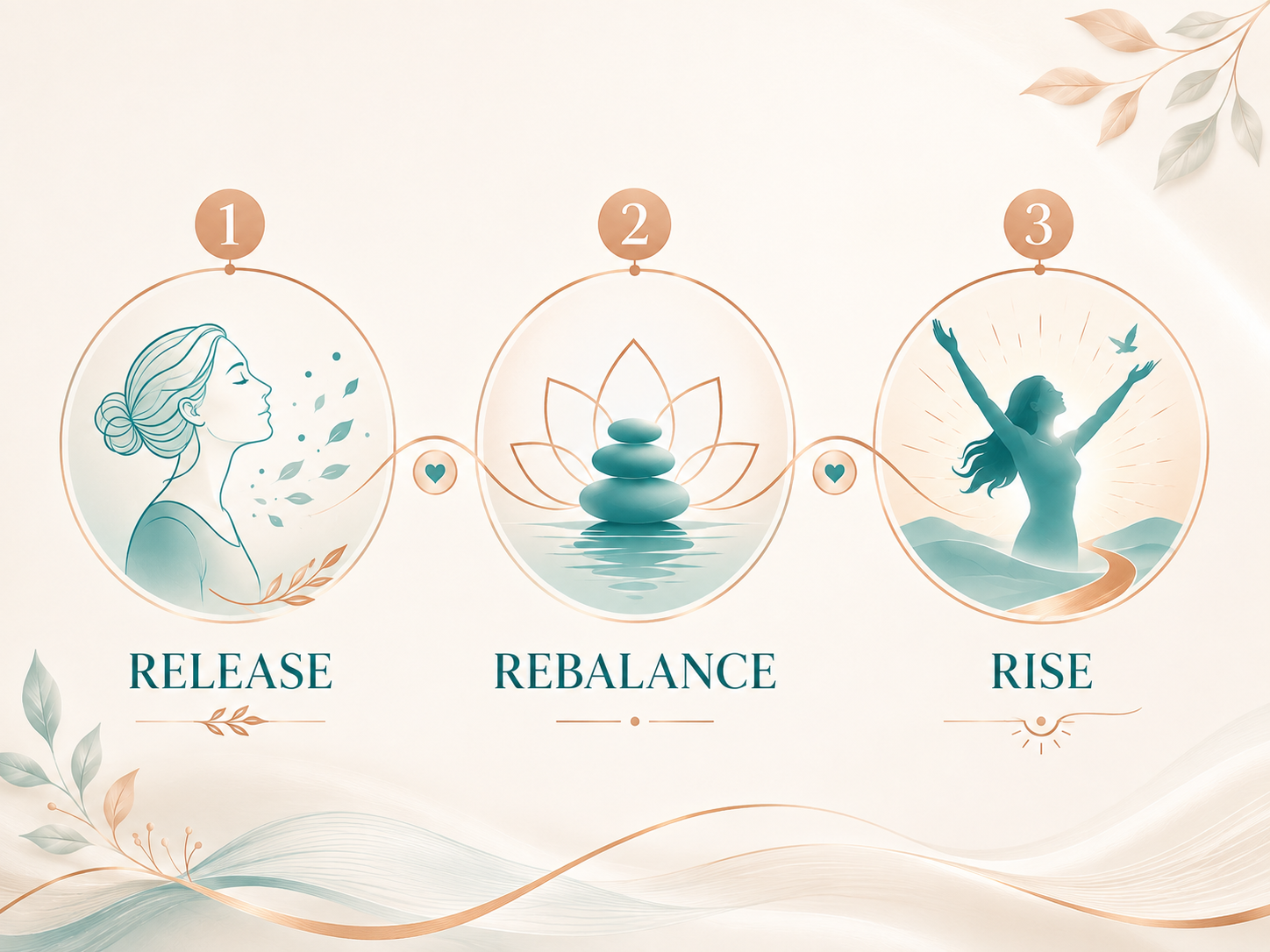
The RRR Method — Release, Rebalance, Rise
Release
Give emotions a healthy outlet before they build to overwhelming intensity — through journaling, tapping, or simply naming the feeling out loud.
Rebalance
With consistent practice, your nervous system's capacity to buffer emotional swings gradually strengthens.
Rise
From a more regulated place, you respond to situations with more choice, rather than being swept away by sudden reactions.
A Name-and-Pause Practice to Try Today
When you notice irritation or tearfulness rising:
- Name it — silently say to yourself, "This is irritation" or "This is sadness."
- Steady it — place a hand on your heart and take one slow breath.
- Soften it — say to yourself, "This feeling is valid, and it will pass."
- Pause — if possible, step away for even 60 seconds before responding.
Naming an emotion calms the brain's alarm center, and the pause creates space between feeling and reaction — often preventing words or actions you might later regret.

“Mood swings soften not by suppressing emotion, but by giving it a safe, regulated outlet.”
A Story I Often Think About
A mother of two teenagers told me she'd started snapping at her children over small things, then crying alone afterward, ashamed. She thought she was "losing control of her personality."
After a few weeks of the name-and-pause practice and daily EFT tapping, she told me something I still return to.
"I still feel the wave coming, but now I have a second before I react. That second has changed everything with my kids."
Common Mistakes Women Make With Mood Swings
- Suppressing emotions until they build to an intense outburst
- Apologizing excessively and carrying guilt long after the moment has passed
- Isolating from loved ones out of fear of "being too much"
- Not explaining to family what's happening physiologically, leaving room for misunderstanding
Frequently Asked Questions
Are mood swings in perimenopause really hormonal, or could it be something else?
Hormonal fluctuations genuinely affect mood-regulating brain chemicals, though it's wise to also discuss persistent mood changes with your doctor.
Will these mood swings ever settle down?
Many women find mood becomes steadier as hormones stabilise post-menopause, especially alongside nervous system support.
How do I explain this to my family without feeling like I'm making excuses?
Simply sharing that your body is undergoing real hormonal changes — not a choice — can help loved ones respond with more patience.
Should I feel guilty when I snap at someone?
It's more helpful to acknowledge the moment, repair the relationship if needed, and focus on building tools for next time, rather than dwelling in guilt.
Can EFT tapping genuinely help with sudden emotional reactions?
Many women find tapping helps process intense emotion before it builds to an overwhelming reaction.
Is journaling actually effective for mood regulation?
Yes, naming and processing emotions on paper can reduce their intensity and help you understand your own patterns.
Does poor sleep make mood swings worse?
Yes, sleep and emotional regulation are closely linked — better sleep often supports steadier moods.
Could antidepressants help with this?
This is a conversation to have with your doctor, who can help determine what's right for your specific situation. If you're wondering whether this is perimenopause or depression, that article walks through the differences gently.
Why do small things suddenly feel so much bigger emotionally?
Fluctuating hormones can lower your nervous system's capacity to buffer reactions, making responses feel more intense than usual.
Is it normal to cry more easily during this stage?
Yes, many women notice increased emotional sensitivity, including crying more easily, during perimenopause.

Your 7-Day Emotional Steadiness Plan
- Day 1–2: Practice the name-and-pause technique whenever irritation or sadness rises.
- Day 3: Journal for 5 minutes on one emotional moment from the day.
- Day 4: Try one EFT tapping round: "Even though my emotions feel unpredictable, I am learning to respond with care."
- Day 5: Share with one trusted person what you've been experiencing physiologically.
- Day 6: Practice a 60-second pause before responding to one frustrating moment.
- Day 7: Reflect on one relationship moment that went differently this week.
What You Can Do Next
- Practice the name-and-pause technique daily this week and notice what shifts.
- Download the free guide 5 Things Every Woman Over 40 Should Know About Her Body.
- If you'd like personalised support, book a free clarity call with me.
- Read the emotional regulation chapter of Your Body Is Speaking.
You have not become a different person. Your emotional regulation system is simply going through real change, and it deserves the same patience and care you'd offer anyone you love. Healing doesn't happen because we know more. Healing happens because we gently practice what truly supports our body, one day at a time. You are much much more powerful than what you think you are.